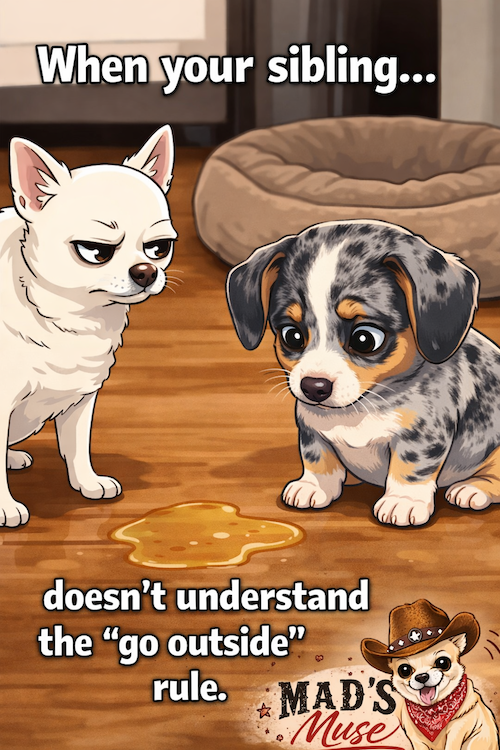

So you’ve brought home a tiny, adorable, slightly chaotic fluffball. Congratulations. You now live with a creature who looks like an angel… and wees like it’s a competitive sport.
House training a puppy is one of those things people massively underestimate. It sounds simple. “Just take them outside, right?”
Yes… and also no. There’s timing, patience, consistency, and a whole lot of “why did you do that there?!”
Let’s break it down properly — without the robotic nonsense.
First things first: your puppy is not being “naughty”
This is important. Your puppy isn’t plotting against your rugs.
They don’t have bladder control yet. Think of them like a tiny, wobbly toddler who drinks water and then immediately needs to go. There is no holding it. There is no warning. There is only… chaos.
If you go into this thinking they’re being difficult, you’ll get frustrated fast. If you go in understanding they literally can’t help it yet, everything becomes easier.
The golden rule: take them out constantly
And when I say constantly, I mean it.
Take your puppy outside:
- First thing in the morning
- After every meal
- After every nap
- After playtime
- After drinking
- Basically… every 30–60 minutes
Yes, it feels excessive. Yes, it’s annoying. But this is what builds the habit.
You are not waiting for them to tell you — you are beating them to it.
Pick a toilet spot and stick to it
Dogs love routine. Pick one area outside and keep taking them there.
Why? Because:
- The smell builds familiarity
- They start associating that spot with “this is where I go”
- It speeds the whole process up
Stand there like a slightly awkward statue and wait. Don’t wander around. Don’t distract them. Just let them focus.
When they go… throw a tiny party
The second they do their business outside, it’s celebration time.
- Calm praise (“good pup!” — not a full-on rave)
- Maybe a small treat
- Positive tone
You want them thinking:
“Ah yes. This behaviour = excellent life choices.”
Timing matters here. Praise them immediately, not when you get back inside.
Accidents will happen (a lot)
Let’s be honest — your puppy will wee on the floor. Probably multiple times. Possibly right after you’ve just taken them outside. It’s humbling.
Here’s how to handle it:
Do:
- Interrupt gently if you catch them mid-act (a quick “ah-ah” or clap)
- Take them straight outside
- Clean it properly (enzymatic cleaner if you can — normal cleaners don’t fully remove the smell)
Don’t:
- Shout
- Rub their nose in it (seriously, no)
- Make a big dramatic scene
Punishment doesn’t teach them where to go — it just teaches them to hide when they go. And that’s how you end up finding “mystery puddles” behind the sofa.
Learn your puppy’s “tells”
Every dog has little signals before they go. You just need to spot them.
Common signs:
- Sniffing the floor like they’ve lost a contact lens
- Circling
- Suddenly wandering off mid-play
- Looking suspiciously focused
The moment you see it — outside. No hesitation.
Night time: yes, you will be tired
Puppies can’t hold it all night (sorry).
Depending on their age, you may need to take them out once or twice overnight. Keep it boring:
- No play
- No excitement
- Straight out, toilet, back in
This isn’t a social event. It’s a business trip.
The good news? This phase doesn’t last forever.
Crate training (your secret weapon)
If used properly, a crate can make house training much easier.
Dogs naturally don’t want to mess where they sleep. A crate:
- Helps them learn to hold it (within reason)
- Prevents them wandering off to secretly pee in corners
- Builds routine
Important: the crate should be cosy, not massive. Too big, and they’ll just use one end as a toilet.
Consistency beats everything
You don’t need to be perfect — you just need to be consistent.
If one day you’re on it, taking them out regularly, and the next day you’re distracted and forget… you’re basically resetting progress.
This is the part most people get wrong. Not lack of knowledge — lack of consistency.
How long does it take?
Realistically:
- A few weeks to get the basics
- A few months for it to be solid
Some puppies get it quickly. Others… take their time. (Usually the confident, slightly stubborn ones.)
You’ll know it’s working when:
- Accidents reduce
- They start heading toward the door
- They begin to hold it for longer
Final sanity check
If you take one thing from this, let it be this:
House training isn’t about reacting to accidents.
It’s about preventing them.
You are managing timing, building habits, and setting your puppy up to succeed.
And one day — sooner than it feels right now — you’ll realise you haven’t cleaned up a single accident all week.
At that point, you can finally relax… slightly.
Until they discover mud.