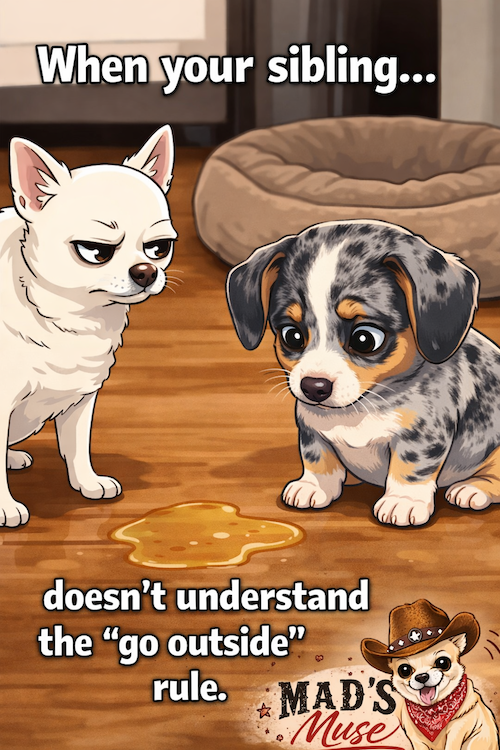
Let’s just say it upfront — some dogs make house training feel like a polite, structured process.
Others?
Absolute chaos gremlins with opinions.
If you’ve got a Dachshund or Chihuahua, you already know this isn’t a lack of intelligence situation… it’s a “I hear you, but I simply won’t be participating” situation.
So here are five breeds that are famously a bit… selective about house training — and why.
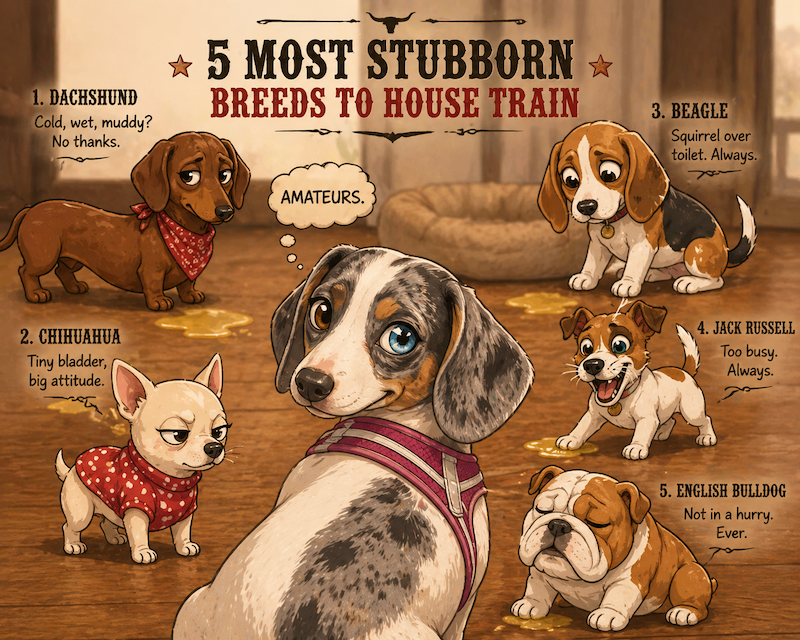
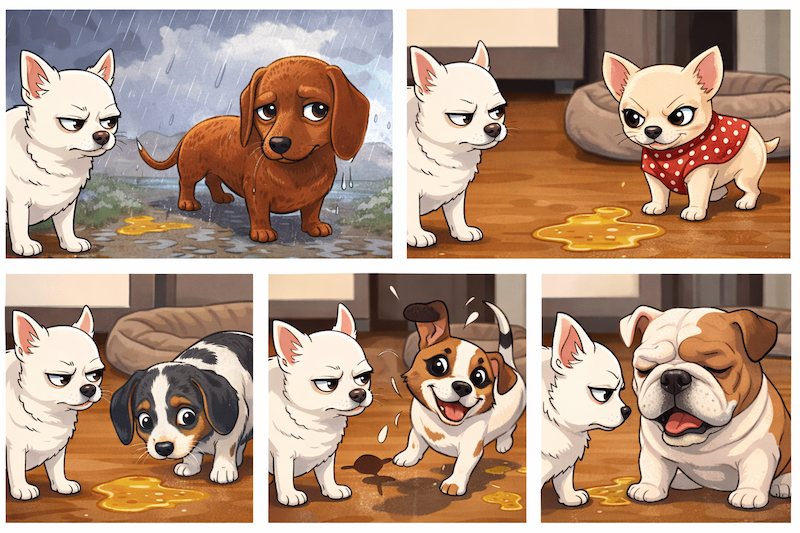
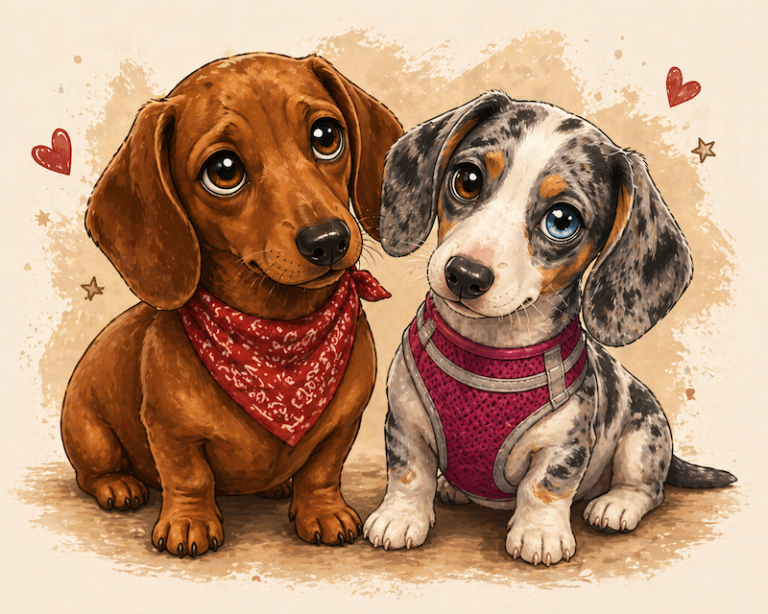
1. Dachshund (aka: The CEO of “No Thanks”)
We’re starting with the obvious.
Dachshunds are iconic for a reason — long body, short legs, massive personality… and an absolute refusal to cooperate if conditions are not ideal.
Why they’re hard to house train:
- Bred to work independently (they hunted badgers — not exactly team players)
- Stubborn streak a mile long
- Tiny bladder = frequent accidents
- Strong dislike of cold and wet weather
Translation:
If it’s raining, your sausage dog is very likely to look at you like you’ve personally betrayed them.
Real talk: They’re not slow learners — they just have terms and conditions.
2. Chihuahua (tiny body, huge attitude)
Ah yes, Maddie’s people.
Chihuahuas get a bad reputation, but honestly — they’re just very clear about what they will and will not tolerate.
Why they struggle:
- Very small bladder (you’re working on a tight schedule)
- Sensitive to cold (again… weather drama)
- Can be nervous or hesitant outside
So what happens?
They decide your warm, cosy house is the superior option.
Can you blame them? Slightly.
Will they still do it anyway? Absolutely.
3. Beagle (the easily distracted toddler)
Beagles are lovely. Sweet. Friendly. Chaos.
Trying to house train a Beagle is like trying to explain taxes to someone who just spotted a squirrel.
Why they’re tricky:
- Short attention span
- Easily distracted by smells (everything is interesting)
- Slower to link actions with outcomes
You take them outside to pee.
They sniff.
They wander.
They forget why they’re there.
They come back inside… and immediately pee.
Classic Beagle behaviour.
4. Jack Russell Terrier (espresso-powered chaos)
If Dachshunds are stubborn, Jack Russells are… chaotic stubborn.
They’re actually very intelligent — which somehow makes it worse.
Why they’re difficult:
- Extremely high energy
- Get distracted mid-task
- Think everything is more fun than toileting
You’ll take them outside and instead of going…
They’ll start zooming, chasing shadows, or inventing a new sport.
House training them isn’t about teaching — it’s about outlasting them.
5. English Bulldog (lovely… but not in a hurry)
Bulldogs are the complete opposite of Jack Russells.
They’re not distracted… they’re just not particularly motivated.
Why they’re slower:
- Lower energy
- Can be stubborn and slow to respond
- Tend to learn at their own pace
You’ll ask them to go outside and they’ll basically say:
“Or… we could not.”
It’s less chaos, more gentle resistance.
So why are these breeds harder?
It’s not random — there are a few common threads:
1. Independence
Breeds like Dachshunds were literally bred to work alone.
They don’t feel the need to check in with you.
2. Small size
Tiny dogs = tiny bladders = more chances to get it wrong.
3. Weather sensitivity
Cold, wet grass?
Absolutely not. They will hold out for better conditions (or your rug).
4. Distraction or low motivation
Some are too busy.
Some can’t be bothered.
Neither is helpful.
The bit no one tells you
Here’s the honest truth:
These breeds are not “bad” at house training.
They just require:
- More consistency
- More patience
- Slightly lower expectations of immediate perfection
And once it clicks?
They’re fine.
Final Maddie-approved verdict
If Maddie had a say in this blog, she’d like it noted that:
- She is perfect
- She has never had an accident
- Any incidents are clearly Esame-related
And honestly?
That sounds about right.